Saddleback Butterfly (Chaetodon Ephippium)
Saddleback Butterflyfish (Chaetodon ephippium)
The Saddleback Butterflyfish is widely regarded as one of the most elegant and "artistic" species in the Chaetodon genus. In the coastal waters of Indonesia, they are a common and majestic sight. While they are hardier than many other butterflyfish, they are large, active swimmers that require a specialized environment to thrive—specifically one where their beauty isn't compromised by the "forbidden fruit" of your favorite corals.
Key Information
-
Common Names: Saddleback Butterfly, Saddle Butterflyfish
-
Scientific Name: Chaetodon ephippium
-
Origin: Indo-Pacific (Indonesia, Philippines, to the Hawaiian Islands)
-
Max Size: 20–23 cm (approx. 8–9 inches)
-
Lifespan: 7–10 years
-
Temperament: Peaceful; can be shy initially
-
Diet: Omnivore – Specialist in coral polyps, sponges, and small invertebrates
-
Care Level: Moderate
Appearance & Identification
The Saddleback is named for the dramatic, "saddle-like" marking on its back:
-
The Saddle: A massive black patch on the upper rear portion of the body, which is dramatically bordered by a glowing white-to-silver band.
-
The Filament: Mature adults develop a long, trailing filament (thread) extending from the top of the dorsal fin, adding to their graceful silhouette.
-
The Body: A greyish-white base color with several thin, horizontal blue-grey lines along the lower half.
-
The Face: Features a yellow snout and a thin black vertical bar through the eye (though this eye-bar is much less prominent than in other butterfly species).
Behaviour & Tank Compatibility
-
The Gentle Giant: This is a peaceful fish that spends its day gracefully gliding through the water column. It is rarely aggressive toward other species.
-
Reef Safe (No): This fish is not reef safe. It is a natural "grazer" of coral polyps (SPS, LPS, and soft corals), as well as anemones and feather dusters. It is a perfect candidate for a high-end FOWLR (Fish Only With Live Rock) tank.
-
Social Structure: They are often seen in pairs in the wild. In a large enough tank, a mated pair is a spectacular sight. Otherwise, they are best kept singly.
-
Tank Mates: Excellent with Tangs, Angelfish, and larger Wrasses. Avoid keeping them with aggressive "fin-nippers" that might target their delicate dorsal filament.
Ideal Tank Setup
-
Tank Size: Because they grow relatively large and are active swimmers, a minimum of 380L (100 Gallons) is required. A 5-to-6-foot tank is ideal.
-
Rockwork: Provide plenty of large caves and overhangs. They are shy when first introduced and need places to retreat until they feel comfortable.
-
Water Quality: They require pristine water conditions. Like most butterflies, they are sensitive to high nitrates and low oxygen levels. Strong protein skimming and regular water changes are a must.
-
Lid: They can be jumpy, especially when first acclimated. A secure lid is necessary.
Dietary Needs
In the wild, they have a varied diet, which can make initial feeding in a tank a bit tricky:
-
Initial Feeding: New arrivals may be picky. Offering live clams or blackworms can help trigger their feeding response.
-
Diet: Once settled, they should be fed a variety of frozen meaty foods (mysis, enriched brine shrimp, chopped squid) and algae-based foods.
-
Grazing: They appreciate having "rocks" to pick at. Some hobbyists use "feeding rocks" smeared with a paste of seafood and algae.
Why Choose the Saddleback Butterfly?
The Saddleback is for the hobbyist who wants a "Showpiece" fish for a large, non-coral display. Its unique "saddle" marking and trailing filament make it stand out as a sophisticated, high-end inhabitant. For a hobbyist in Wonosobo looking for a locally native Indonesian species that represents the true beauty of the Indo-Pacific reefs, the Saddleback is a top-tier choice.
Description
Saddleback Butterflyfish (Chaetodon ephippium)
The Saddleback Butterflyfish is widely regarded as one of the most elegant and "artistic" species in the Chaetodon genus. In the coastal waters of Indonesia, they are a common and majestic sight. While they are hardier than many other butterflyfish, they are large, active swimmers that require a specialized environment to thrive—specifically one where their beauty isn't compromised by the "forbidden fruit" of your favorite corals.
Key Information
-
Common Names: Saddleback Butterfly, Saddle Butterflyfish
-
Scientific Name: Chaetodon ephippium
-
Origin: Indo-Pacific (Indonesia, Philippines, to the Hawaiian Islands)
-
Max Size: 20–23 cm (approx. 8–9 inches)
-
Lifespan: 7–10 years
-
Temperament: Peaceful; can be shy initially
-
Diet: Omnivore – Specialist in coral polyps, sponges, and small invertebrates
-
Care Level: Moderate
Appearance & Identification
The Saddleback is named for the dramatic, "saddle-like" marking on its back:
-
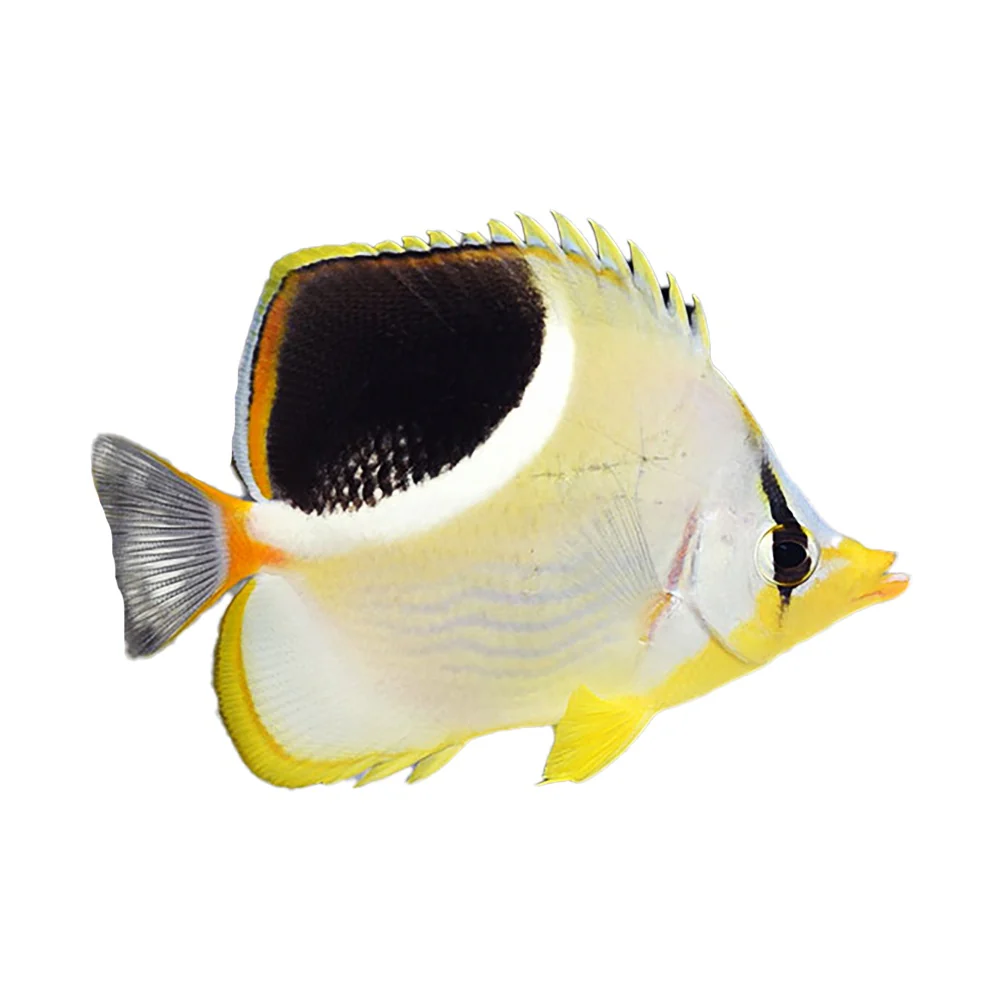
The Saddle: A massive black patch on the upper rear portion of the body, which is dramatically bordered by a glowing white-to-silver band.
-
The Filament: Mature adults develop a long, trailing filament (thread) extending from the top of the dorsal fin, adding to their graceful silhouette.
-
The Body: A greyish-white base color with several thin, horizontal blue-grey lines along the lower half.
-
The Face: Features a yellow snout and a thin black vertical bar through the eye (though this eye-bar is much less prominent than in other butterfly species).
Behaviour & Tank Compatibility
-
The Gentle Giant: This is a peaceful fish that spends its day gracefully gliding through the water column. It is rarely aggressive toward other species.
-
Reef Safe (No): This fish is not reef safe. It is a natural "grazer" of coral polyps (SPS, LPS, and soft corals), as well as anemones and feather dusters. It is a perfect candidate for a high-end FOWLR (Fish Only With Live Rock) tank.
-
Social Structure: They are often seen in pairs in the wild. In a large enough tank, a mated pair is a spectacular sight. Otherwise, they are best kept singly.
-
Tank Mates: Excellent with Tangs, Angelfish, and larger Wrasses. Avoid keeping them with aggressive "fin-nippers" that might target their delicate dorsal filament.
Ideal Tank Setup
-
Tank Size: Because they grow relatively large and are active swimmers, a minimum of 380L (100 Gallons) is required. A 5-to-6-foot tank is ideal.
-
Rockwork: Provide plenty of large caves and overhangs. They are shy when first introduced and need places to retreat until they feel comfortable.
-
Water Quality: They require pristine water conditions. Like most butterflies, they are sensitive to high nitrates and low oxygen levels. Strong protein skimming and regular water changes are a must.
-
Lid: They can be jumpy, especially when first acclimated. A secure lid is necessary.
Dietary Needs
In the wild, they have a varied diet, which can make initial feeding in a tank a bit tricky:
-
Initial Feeding: New arrivals may be picky. Offering live clams or blackworms can help trigger their feeding response.
-
Diet: Once settled, they should be fed a variety of frozen meaty foods (mysis, enriched brine shrimp, chopped squid) and algae-based foods.
-
Grazing: They appreciate having "rocks" to pick at. Some hobbyists use "feeding rocks" smeared with a paste of seafood and algae.
Why Choose the Saddleback Butterfly?
The Saddleback is for the hobbyist who wants a "Showpiece" fish for a large, non-coral display. Its unique "saddle" marking and trailing filament make it stand out as a sophisticated, high-end inhabitant. For a hobbyist in Wonosobo looking for a locally native Indonesian species that represents the true beauty of the Indo-Pacific reefs, the Saddleback is a top-tier choice.