Kole Tang (Ctenochaetus Strigosus)
Kole Tang (Ctenochaetus strigosus)
The Kole Tang, also known as the Yellow-eye Kole Tang or Spotted Bristletooth Tang, is widely considered the "best" tang for a home reef. While it may not have the neon colors of a Powder Blue or the fame of a Dory, it is the most practical choice for maintenance. As a member of the Bristletooth family, it has specialized teeth designed to "comb" rocks and glass, making it an elite cleaner of film algae and detritus.
Key Information
-
Common Names: Kole Tang, Yellow-eye Kole Tang, Spotted Bristletooth Tang
-
Scientific Name: Ctenochaetus strigosus
-
Origin: Hawaii (Endemic)
-
Max Size: 15–18 cm (approx. 6–7 inches)
-
Lifespan: 10+ years
-
Temperament: Semi-aggressive; mostly peaceful but territorial toward other Bristletooths
-
Diet: Herbivore / Detritivore – Specialist in film algae
-
Care Level: Moderate (Sensitive to water quality and shipping)
Appearance & Identification
The Kole Tang has a sophisticated, understated beauty that reveals itself upon closer inspection:
-
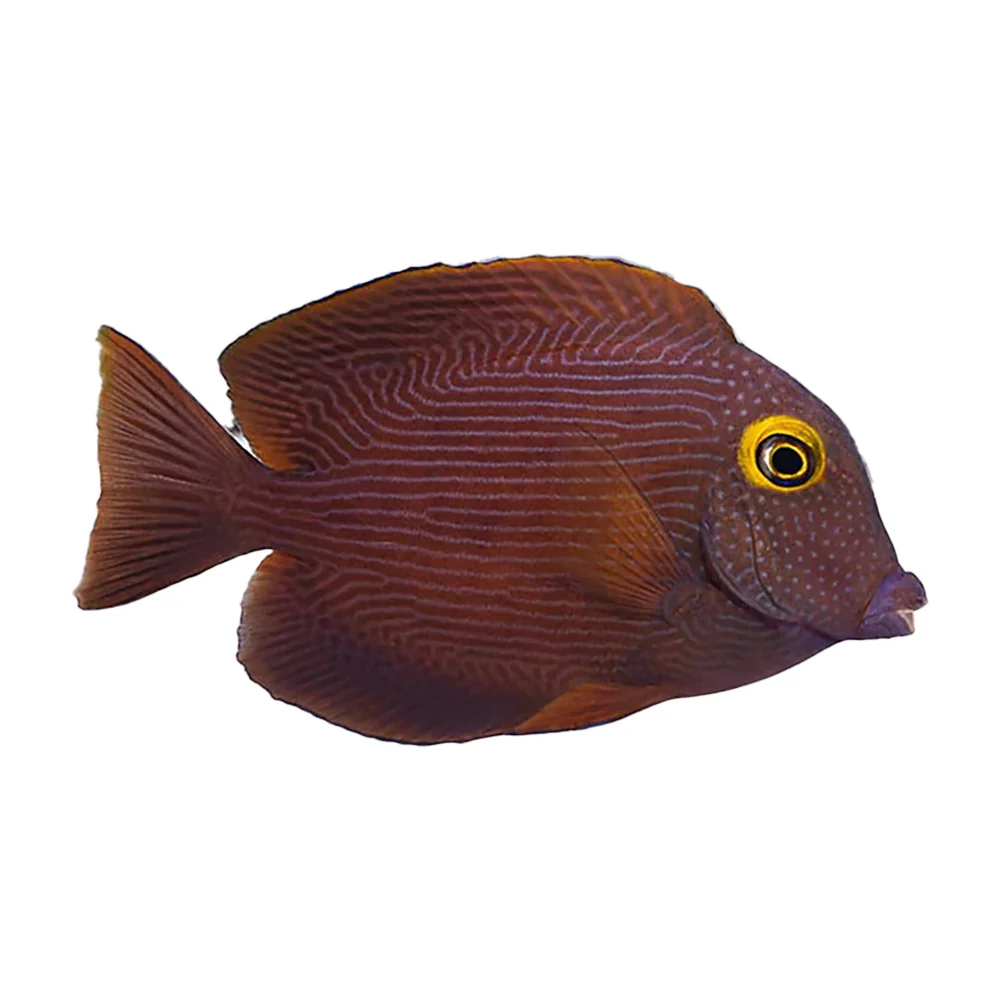
The "Yellow Eye": Its most defining feature is a bright yellow ring around the eye.
-
Body Pattern: A deep burgundy-to-purple body covered in hundreds of fine, horizontal pale pinkish lines. The head often features tiny spots rather than lines.
-
The Mouth: It has a unique "vacuum-like" mouth with comb-like teeth used for scraping algae. You will often see "kiss marks" on the glass where the Kole has been eating.
Behaviour & Tank Compatibility
-
The Workhorse: Unlike many tangs that wait for Nori, the Kole spends 100% of its day picking at the rocks and glass. It is one of the few fish that will eat brown diatoms and film algae effectively.
-
Aggression Level: It is one of the most peaceful tangs toward other types of fish. However, it will be very aggressive toward other members of the Ctenochaetus genus (like the Tomini or Two-Spot Tang).
-
Reef Safe: 100% Reef Safe. They are excellent for coral health because they keep the rock surfaces clean for coral attachment and growth.
-
Tank Mates: Excellent with Clownfish, Wrasses, and Anthias. If keeping with other tangs, ensure they have different body shapes (like a Yellow Tang or Naso Tang).
Ideal Tank Setup
-
Tank Size: A minimum of 285L (75 Gallons) is required. While they are smaller than other tangs, they are very active and need swimming room.
-
Rockwork: Provide plenty of mature live rock. The more surface area you have for algae and biofilm to grow, the happier the Kole will be.
-
Water Flow: They prefer moderate to high flow. Good oxygenation is essential for their long-term health.
-
Substrate: They will occasionally sift the top layer of sand for detritus, so a sandy bottom is preferred.
Dietary Needs
Even though they are great cleaners, they cannot survive on tank algae alone:
-
Primary Diet: Offer high-quality spirulina-based flakes and pellets.
-
Seaweed: They will eat Nori (dried seaweed), though they often prefer to "scrape" it rather than tear it.
-
Frozen Foods: They will readily eat mysis and brine shrimp, which provide necessary protein.
-
Health Note: They are susceptible to Head and Lateral Line Erosion (HLLE) and Marine Ich. A diet rich in vitamins and a stable environment are the best defenses.
Why Choose the Kole Tang?
The Kole Tang is the "janitor" of the reef. It is the perfect choice for a hobbyist who wants a functional fish that remains a manageable size and doesn't bully the rest of the tank. Its deep purple tones provide a beautiful contrast to bright green or orange corals, and its constant activity makes it a joy to watch.
Description
Kole Tang (Ctenochaetus strigosus)
The Kole Tang, also known as the Yellow-eye Kole Tang or Spotted Bristletooth Tang, is widely considered the "best" tang for a home reef. While it may not have the neon colors of a Powder Blue or the fame of a Dory, it is the most practical choice for maintenance. As a member of the Bristletooth family, it has specialized teeth designed to "comb" rocks and glass, making it an elite cleaner of film algae and detritus.
Key Information
-
Common Names: Kole Tang, Yellow-eye Kole Tang, Spotted Bristletooth Tang
-
Scientific Name: Ctenochaetus strigosus
-
Origin: Hawaii (Endemic)
-
Max Size: 15–18 cm (approx. 6–7 inches)
-
Lifespan: 10+ years
-
Temperament: Semi-aggressive; mostly peaceful but territorial toward other Bristletooths
-
Diet: Herbivore / Detritivore – Specialist in film algae
-
Care Level: Moderate (Sensitive to water quality and shipping)
Appearance & Identification
The Kole Tang has a sophisticated, understated beauty that reveals itself upon closer inspection:
-
The "Yellow Eye": Its most defining feature is a bright yellow ring around the eye.
-
Body Pattern: A deep burgundy-to-purple body covered in hundreds of fine, horizontal pale pinkish lines. The head often features tiny spots rather than lines.
-
The Mouth: It has a unique "vacuum-like" mouth with comb-like teeth used for scraping algae. You will often see "kiss marks" on the glass where the Kole has been eating.
Behaviour & Tank Compatibility
-
The Workhorse: Unlike many tangs that wait for Nori, the Kole spends 100% of its day picking at the rocks and glass. It is one of the few fish that will eat brown diatoms and film algae effectively.
-
Aggression Level: It is one of the most peaceful tangs toward other types of fish. However, it will be very aggressive toward other members of the Ctenochaetus genus (like the Tomini or Two-Spot Tang).
-
Reef Safe: 100% Reef Safe. They are excellent for coral health because they keep the rock surfaces clean for coral attachment and growth.
-
Tank Mates: Excellent with Clownfish, Wrasses, and Anthias. If keeping with other tangs, ensure they have different body shapes (like a Yellow Tang or Naso Tang).
Ideal Tank Setup
-
Tank Size: A minimum of 285L (75 Gallons) is required. While they are smaller than other tangs, they are very active and need swimming room.
-
Rockwork: Provide plenty of mature live rock. The more surface area you have for algae and biofilm to grow, the happier the Kole will be.
-
Water Flow: They prefer moderate to high flow. Good oxygenation is essential for their long-term health.
-
Substrate: They will occasionally sift the top layer of sand for detritus, so a sandy bottom is preferred.
Dietary Needs
Even though they are great cleaners, they cannot survive on tank algae alone:
-
Primary Diet: Offer high-quality spirulina-based flakes and pellets.
-
Seaweed: They will eat Nori (dried seaweed), though they often prefer to "scrape" it rather than tear it.
-
Frozen Foods: They will readily eat mysis and brine shrimp, which provide necessary protein.
-
Health Note: They are susceptible to Head and Lateral Line Erosion (HLLE) and Marine Ich. A diet rich in vitamins and a stable environment are the best defenses.
Why Choose the Kole Tang?
The Kole Tang is the "janitor" of the reef. It is the perfect choice for a hobbyist who wants a functional fish that remains a manageable size and doesn't bully the rest of the tank. Its deep purple tones provide a beautiful contrast to bright green or orange corals, and its constant activity makes it a joy to watch.