Pearl Dartfish (Ptereleotris Microlepis)
Pearl Dartfish (Ptereleotris microlepis)
The Pearl Dartfish, also known as the Pale Dartfish or Smallscale Gudgeon, is an elegant, slender species that adds a sense of graceful movement to a reef tank. While they lack the neon "pop" of the Helfrichi Firefish, they possess a subtle, pearlescent glow that is highly attractive under aquarium lighting. In the wild, they are common throughout the Indo-Pacific, including the shallow lagoons and seaward reefs of Indonesia.
Key Information
-
Common Names: Pearl Dartfish, Pale Dartfish, Smallscale Gudgeon
-
Scientific Name: Ptereleotris microlepis
-
Origin: Indo-Pacific (Red Sea to the Line Islands, common in Indonesia)
-
Max Size: 12–14 cm (approx. 5 inches)
-
Lifespan: 3–5 years
-
Temperament: Very Peaceful; shy and easily startled
-
Diet: Carnivore – Planktivore
-
Care Level: Easy to Moderate (due to jumping risk)
Appearance & Identification
The beauty of the Pearl Dartfish is in its iridescent "shimmer":
-
The Color: A pale, powdery blue-to-green body that appears white or silver depending on the light. It has a beautiful pearlescent sheen that "glows" under blue LEDs.
-
The Head: Features faint blue lines and dots around the eye and gill area.
-
The Fins: The dorsal and anal fins are long and delicate, often carrying a very fine blue or dark trim.
-
Body Shape: Extremely slender and "torpedo-shaped," built for sudden bursts of speed.
Behaviour & Tank Compatibility
-
The "Darting" Habit: True to their name, they spend much of their time hovering in the mid-water column, "darting" forward to catch tiny pieces of food and then retreating into a hole if they sense danger.
-
Reef Safe: 100% Reef Safe. They are completely harmless to corals, clams, and even the smallest ornamental shrimp.
-
Social Structure: Unlike many firefish, Pearl Dartfish are very social. They are much more confident when kept in groups of 3 or more. They will often share the same burrow or bolt-hole.
-
Tank Mates: Must be kept with peaceful companions. They are easily bullied by aggressive damsels or large, boisterous wrasses. Excellent with Anthias, Cardinalfish, and peaceful Gobies.
Ideal Tank Setup
-
Tank Size: A minimum of 115L (30 Gallons) for a group.
-
Lid is Mandatory: This is the most important rule for dartfish. They are notorious jumpers. If startled (even by the lights turning on), they will bolt upward. A tight-fitting mesh or glass lid is essential.
-
Rockwork: Provide a sand bed and rockwork with specific "bolt-holes". They like to have a designated cave or crevice where the entire group can vanish simultaneously.
-
Water Flow: They prefer moderate flow. They enjoy swimming against a steady current in the middle of the tank.
Dietary Needs
They have high metabolisms and need to eat small amounts frequently:
-
Feeding Frequency: Feed 2–3 times daily.
-
Preferred Foods: Small frozen meaty foods like mysis, enriched brine shrimp, Calanus, and copepods.
-
Dry Foods: Once acclimated, they will usually accept high-quality marine flakes and tiny pellets.
Why Choose the Pearl Dartfish?
The Pearl Dartfish is for the hobbyist who wants a peaceful, schooling fish that brings a tranquil "drift" to the aquarium. While a single fish might be shy, a small group of 5 or 6 creates a beautiful, shimmering effect in the water column. They are a fantastic, budget-friendly alternative to more expensive dartfish and are a perfect fit for a peaceful Indonesian-themed reef.
Original: $36.16
-65%$36.16
$12.66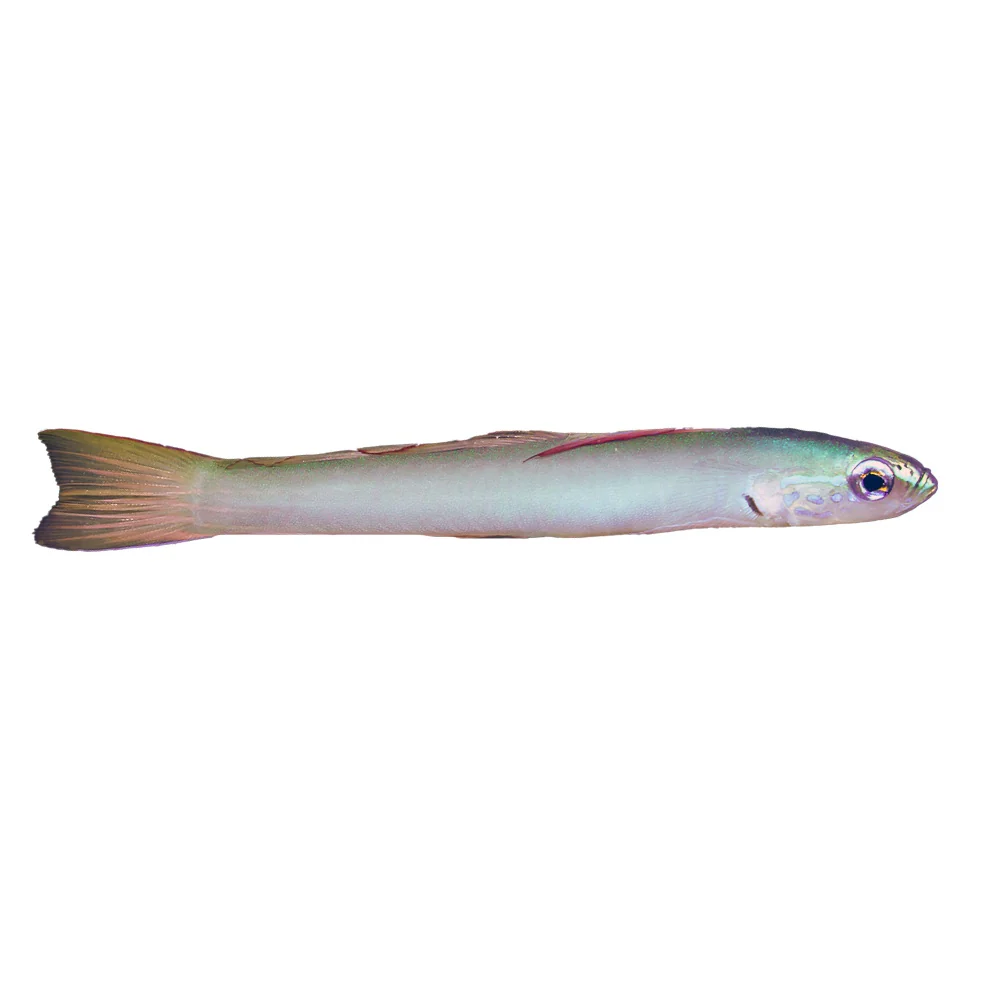
Description
Pearl Dartfish (Ptereleotris microlepis)
The Pearl Dartfish, also known as the Pale Dartfish or Smallscale Gudgeon, is an elegant, slender species that adds a sense of graceful movement to a reef tank. While they lack the neon "pop" of the Helfrichi Firefish, they possess a subtle, pearlescent glow that is highly attractive under aquarium lighting. In the wild, they are common throughout the Indo-Pacific, including the shallow lagoons and seaward reefs of Indonesia.
Key Information
-
Common Names: Pearl Dartfish, Pale Dartfish, Smallscale Gudgeon
-
Scientific Name: Ptereleotris microlepis
-
Origin: Indo-Pacific (Red Sea to the Line Islands, common in Indonesia)
-
Max Size: 12–14 cm (approx. 5 inches)
-
Lifespan: 3–5 years
-
Temperament: Very Peaceful; shy and easily startled
-
Diet: Carnivore – Planktivore
-
Care Level: Easy to Moderate (due to jumping risk)
Appearance & Identification
The beauty of the Pearl Dartfish is in its iridescent "shimmer":
-
The Color: A pale, powdery blue-to-green body that appears white or silver depending on the light. It has a beautiful pearlescent sheen that "glows" under blue LEDs.
-
The Head: Features faint blue lines and dots around the eye and gill area.
-
The Fins: The dorsal and anal fins are long and delicate, often carrying a very fine blue or dark trim.
-
Body Shape: Extremely slender and "torpedo-shaped," built for sudden bursts of speed.
Behaviour & Tank Compatibility
-
The "Darting" Habit: True to their name, they spend much of their time hovering in the mid-water column, "darting" forward to catch tiny pieces of food and then retreating into a hole if they sense danger.
-
Reef Safe: 100% Reef Safe. They are completely harmless to corals, clams, and even the smallest ornamental shrimp.
-
Social Structure: Unlike many firefish, Pearl Dartfish are very social. They are much more confident when kept in groups of 3 or more. They will often share the same burrow or bolt-hole.
-
Tank Mates: Must be kept with peaceful companions. They are easily bullied by aggressive damsels or large, boisterous wrasses. Excellent with Anthias, Cardinalfish, and peaceful Gobies.
Ideal Tank Setup
-
Tank Size: A minimum of 115L (30 Gallons) for a group.
-
Lid is Mandatory: This is the most important rule for dartfish. They are notorious jumpers. If startled (even by the lights turning on), they will bolt upward. A tight-fitting mesh or glass lid is essential.
-
Rockwork: Provide a sand bed and rockwork with specific "bolt-holes". They like to have a designated cave or crevice where the entire group can vanish simultaneously.
-
Water Flow: They prefer moderate flow. They enjoy swimming against a steady current in the middle of the tank.
Dietary Needs
They have high metabolisms and need to eat small amounts frequently:
-
Feeding Frequency: Feed 2–3 times daily.
-
Preferred Foods: Small frozen meaty foods like mysis, enriched brine shrimp, Calanus, and copepods.
-
Dry Foods: Once acclimated, they will usually accept high-quality marine flakes and tiny pellets.
Why Choose the Pearl Dartfish?
The Pearl Dartfish is for the hobbyist who wants a peaceful, schooling fish that brings a tranquil "drift" to the aquarium. While a single fish might be shy, a small group of 5 or 6 creates a beautiful, shimmering effect in the water column. They are a fantastic, budget-friendly alternative to more expensive dartfish and are a perfect fit for a peaceful Indonesian-themed reef.