Green Leopard Wrasse Male (Macropharyngodon Meleagris)
Green Leopard Wrasse Male (Macropharyngodon meleagris)
The Green Leopard Wrasse, also known as the Blackspotted Wrasse or Leopard Wrasse, is a spectacular species from the Indo-Pacific. While juveniles and females are lovely, the Terminal Male is a true masterpiece of natural patterns. Keeping this fish is a sign of an experienced aquarist, as they have specialized needs regarding substrate and diet, but the reward is one of the most visually stunning fish in the entire marine hobby.
Key Information
-
Common Names: Green Leopard Wrasse, Blackspotted Wrasse, Meleagris Leopard Wrasse
-
Scientific Name: Macropharyngodon meleagris
-
Origin: Indo-Pacific (East Africa to the Line Islands)
-
Max Size: 12–15 cm (approx. 5–6 inches)
-
Lifespan: 5–8 years
-
Temperament: Peaceful; shy and easily stressed
-
Diet: Carnivore – Specialist hunter of micro-crustaceans
-
Care Level: Expert Only
Appearance & Identification (Male vs. Female)
This species is sexually dichromatic, meaning the males and females look completely different:
-
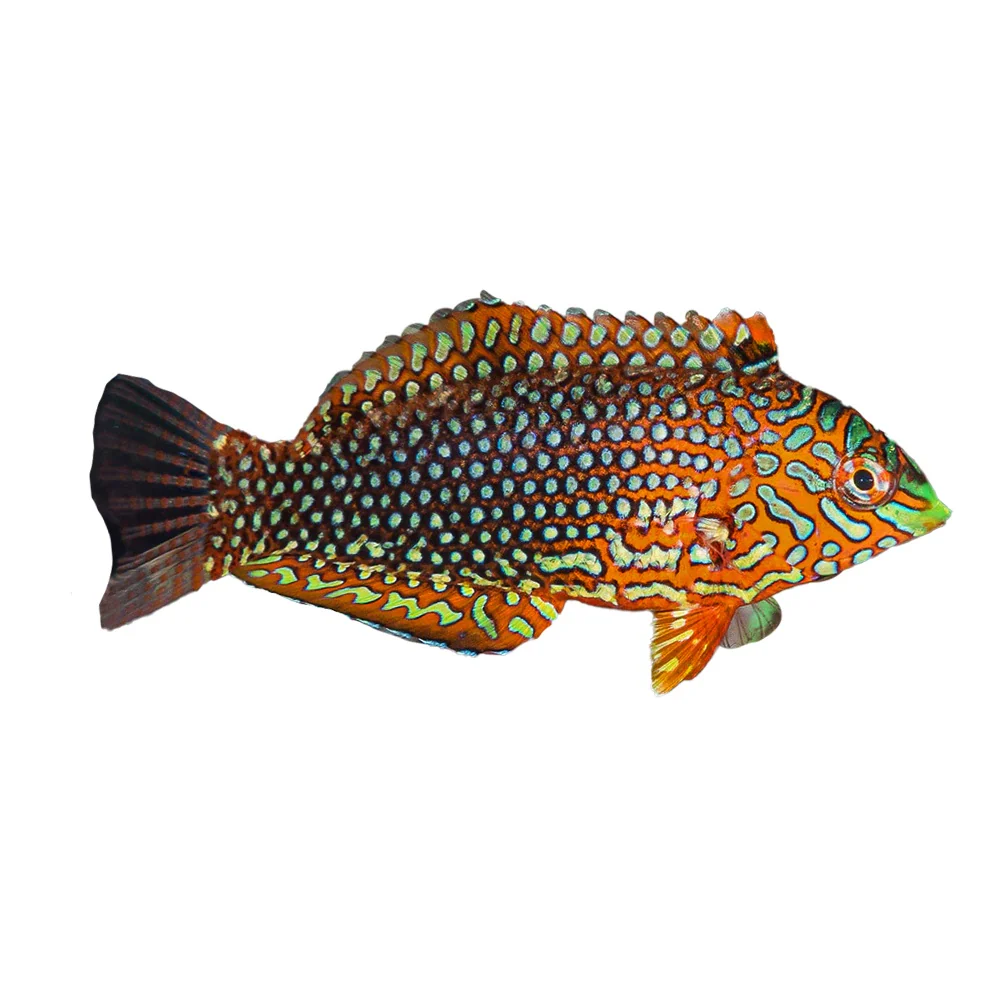
The Male: Features a breathtaking complex mosaic of electric blue-green, neon orange, and gold markings over a dark background. The patterns look like intricate circuitry or fine leopard spots.
-
The Female: Has a white-to-light-green body covered in distinct, irregular black spots (the classic "leopard" look).
-
The Transition: These fish are protogynous hermaphrodites. If you keep a group of females, the largest and most dominant will eventually transition into the spectacular male form.
Behaviour & Tank Compatibility
-
Sand Sleepers: Like all Macropharyngodon species, the Leopard Wrasse dives into the sand to sleep and to hide from predators. If it feels threatened, it will vanish into the substrate in the blink of an eye.
-
The "Searcher": They spend 100% of their waking hours patrolling the rockwork, meticulously picking off tiny copepods and amphipods.
-
Reef Safe: 100% Reef Safe. They are a benefit to corals as they hunt for parasitic flatworms and pyramidellid snails.
-
Social Structure: They thrive in a harem (one male with several females). Multiple males will fight to the death.
-
Tank Mates: Must be kept with peaceful, non-aggressive fish (Anthias, Firefish, Cardinalfish). Avoid boisterous tank mates like large Damselfish or aggressive Wrasses (like Six-Lines) that will out-compete them for food or bully them.
Ideal Tank Setup
-
Substrate is Mandatory: You must have a fine, soft sand bed (at least 2–3 inches deep). Coarse gravel or crushed coral will injure their delicate snouts and skin as they try to bury themselves, leading to fatal infections.
-
Tank Size: A minimum of 340L (90 Gallons) for a single specimen or a harem to ensure there is enough rock surface area for "pod" growth.
-
Maturity: This fish should never be added to a new tank. The aquarium must be well-established (6+ months) with a thriving population of copepods.
-
Lid: They are powerful jumpers, especially when they first wake up and emerge from the sand. A secure mesh lid is essential.
Dietary Needs: The Biggest Hurdle
The primary cause of failure with Leopard Wrasses is starvation.
-
Pod Dependence: They rely heavily on live food found in the rockwork.
-
Training: You must actively work to transition them to frozen foods. Offer small, frequent feedings of frozen cyclops, lobster eggs, and finely shaved mysis.
-
Frequency: Because they are so active, they need to be fed 3+ times a day until they are well-acclimated.
Why Choose the Green Leopard Wrasse?
The Green Leopard Wrasse is for the dedicated reef keeper who takes pride in maintaining a complex, mature ecosystem. It is a "living jewel" that showcases the incredible diversity of the reef. If you have a deep sand bed, a thriving pod population, and a peaceful community, the male Green Leopard Wrasse will be the undisputed star of your display.
Description
Green Leopard Wrasse Male (Macropharyngodon meleagris)
The Green Leopard Wrasse, also known as the Blackspotted Wrasse or Leopard Wrasse, is a spectacular species from the Indo-Pacific. While juveniles and females are lovely, the Terminal Male is a true masterpiece of natural patterns. Keeping this fish is a sign of an experienced aquarist, as they have specialized needs regarding substrate and diet, but the reward is one of the most visually stunning fish in the entire marine hobby.
Key Information
-
Common Names: Green Leopard Wrasse, Blackspotted Wrasse, Meleagris Leopard Wrasse
-
Scientific Name: Macropharyngodon meleagris
-
Origin: Indo-Pacific (East Africa to the Line Islands)
-
Max Size: 12–15 cm (approx. 5–6 inches)
-
Lifespan: 5–8 years
-
Temperament: Peaceful; shy and easily stressed
-
Diet: Carnivore – Specialist hunter of micro-crustaceans
-
Care Level: Expert Only
Appearance & Identification (Male vs. Female)
This species is sexually dichromatic, meaning the males and females look completely different:
-
The Male: Features a breathtaking complex mosaic of electric blue-green, neon orange, and gold markings over a dark background. The patterns look like intricate circuitry or fine leopard spots.
-
The Female: Has a white-to-light-green body covered in distinct, irregular black spots (the classic "leopard" look).
-
The Transition: These fish are protogynous hermaphrodites. If you keep a group of females, the largest and most dominant will eventually transition into the spectacular male form.
Behaviour & Tank Compatibility
-
Sand Sleepers: Like all Macropharyngodon species, the Leopard Wrasse dives into the sand to sleep and to hide from predators. If it feels threatened, it will vanish into the substrate in the blink of an eye.
-
The "Searcher": They spend 100% of their waking hours patrolling the rockwork, meticulously picking off tiny copepods and amphipods.
-
Reef Safe: 100% Reef Safe. They are a benefit to corals as they hunt for parasitic flatworms and pyramidellid snails.
-
Social Structure: They thrive in a harem (one male with several females). Multiple males will fight to the death.
-
Tank Mates: Must be kept with peaceful, non-aggressive fish (Anthias, Firefish, Cardinalfish). Avoid boisterous tank mates like large Damselfish or aggressive Wrasses (like Six-Lines) that will out-compete them for food or bully them.
Ideal Tank Setup
-
Substrate is Mandatory: You must have a fine, soft sand bed (at least 2–3 inches deep). Coarse gravel or crushed coral will injure their delicate snouts and skin as they try to bury themselves, leading to fatal infections.
-
Tank Size: A minimum of 340L (90 Gallons) for a single specimen or a harem to ensure there is enough rock surface area for "pod" growth.
-
Maturity: This fish should never be added to a new tank. The aquarium must be well-established (6+ months) with a thriving population of copepods.
-
Lid: They are powerful jumpers, especially when they first wake up and emerge from the sand. A secure mesh lid is essential.
Dietary Needs: The Biggest Hurdle
The primary cause of failure with Leopard Wrasses is starvation.
-
Pod Dependence: They rely heavily on live food found in the rockwork.
-
Training: You must actively work to transition them to frozen foods. Offer small, frequent feedings of frozen cyclops, lobster eggs, and finely shaved mysis.
-
Frequency: Because they are so active, they need to be fed 3+ times a day until they are well-acclimated.
Why Choose the Green Leopard Wrasse?
The Green Leopard Wrasse is for the dedicated reef keeper who takes pride in maintaining a complex, mature ecosystem. It is a "living jewel" that showcases the incredible diversity of the reef. If you have a deep sand bed, a thriving pod population, and a peaceful community, the male Green Leopard Wrasse will be the undisputed star of your display.