Cichlid Eartheater Gold Dust (Geophagus Alto Sinu)
Gold Dust Eartheater (Geophagus sp. "Alto Sinu")
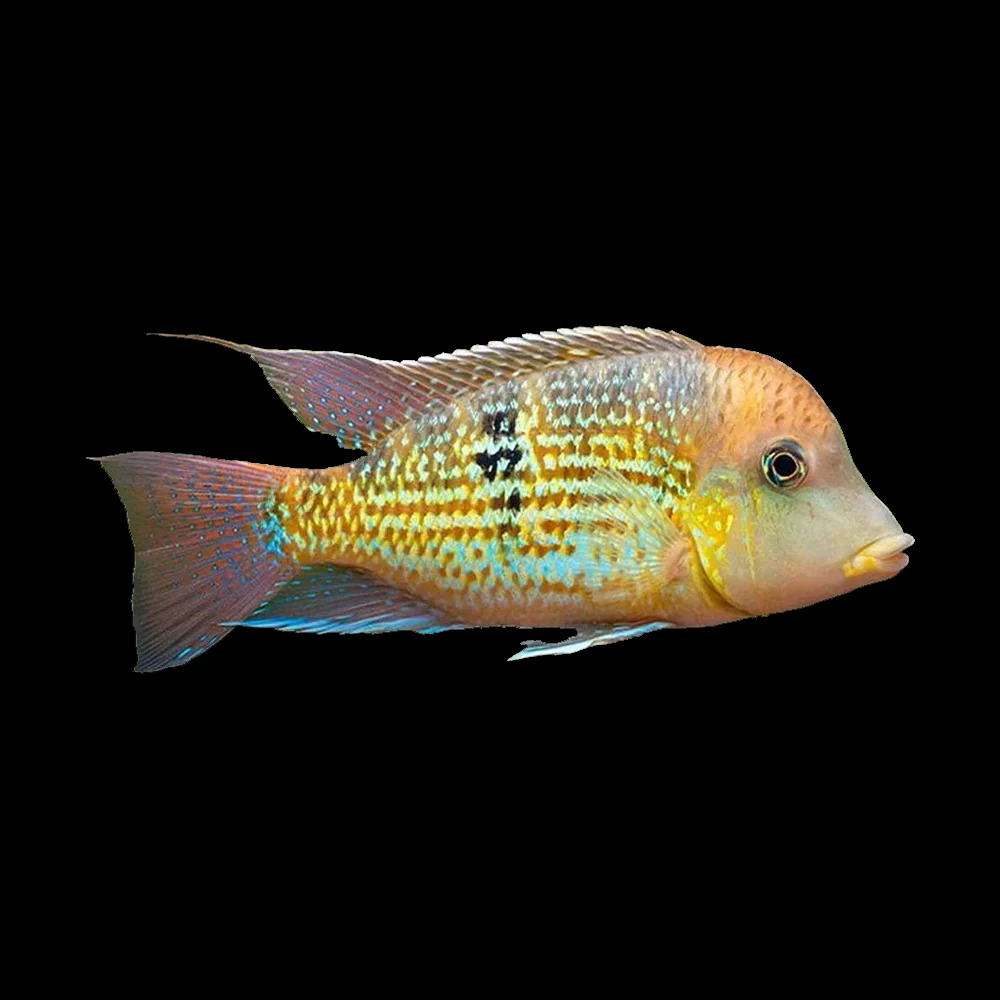
The Gold Dust Eartheater is a medium-to-large cichlid that perfectly balances elegance with activity. Native to the Rio Sinu drainage in Colombia, this species is highly active and spends most of its daylight hours sifting through the sand. It is distinguished by its warm olive-gold base color and brilliant blue-green iridescence on the scales and fins. As they mature, they develop long, flowing filaments on their pelvic and caudal fins, making them a true showstopper in a mature Amazonian-style aquarium.
Key Information
-
Common Name: Gold Dust Eartheater, Alto Sinu Eartheater
-
Scientific Name: Geophagus sp. "Alto Sinu"
-
Origin: Colombia (Rio Sinu Basin)
-
Max Size: 18–22 cm
-
Lifespan: 10–12 years
-
Temperament: Peaceful to Semi-aggressive (Territorial only during spawning)
-
Diet: Omnivore – Sinking pellets, flakes, and frozen foods like mysis shrimp or bloodworms.
-
Care Level: Moderate
Water Parameters
| Parameter | Value |
| Temperature: | 26–30°C |
| pH: | 6.5–7.5 |
| Hardness: | 5–15 dGH |
| Minimum Tank Size: | 300L+ |
Behaviour & Tank Compatibility
Gold Dust Eartheaters are social and should ideally be kept in groups of 5 or more to establish a natural hierarchy. Keeping them in groups helps diffuse the minor aggression that can occur during breeding. They are excellent community residents and can live alongside other peaceful South American cichlids, larger Tetras, and armored Catfish (Loricariids). Avoid very small fish that could be accidentally swallowed during their enthusiastic feeding.
Ideal Tank Setup
-
Fine Sand Substrate: Critical. Just like the G. altifrons, this species sifts sand through its gills to find food. Coarse gravel is dangerous and will prevent their natural behavior.
-
Large Footprint: A "Long" tank is much better than a "Tall" tank for this species, as they live almost exclusively on the bottom third of the aquarium.
-
Moderate Water Flow: They enjoy a bit of current, but ensure there are "dead zones" behind rocks or driftwood where they can rest.
-
Pristine Filtration: Because they constantly kick up sand particles, you will need strong mechanical filtration to keep the water crystal clear.
-
Botanicals: Adding dried leaves (Catappa) and driftwood will mimic their natural habitat and help keep the water slightly acidic.
Description
Gold Dust Eartheater (Geophagus sp. "Alto Sinu")
The Gold Dust Eartheater is a medium-to-large cichlid that perfectly balances elegance with activity. Native to the Rio Sinu drainage in Colombia, this species is highly active and spends most of its daylight hours sifting through the sand. It is distinguished by its warm olive-gold base color and brilliant blue-green iridescence on the scales and fins. As they mature, they develop long, flowing filaments on their pelvic and caudal fins, making them a true showstopper in a mature Amazonian-style aquarium.
Key Information
-
Common Name: Gold Dust Eartheater, Alto Sinu Eartheater
-
Scientific Name: Geophagus sp. "Alto Sinu"
-
Origin: Colombia (Rio Sinu Basin)
-
Max Size: 18–22 cm
-
Lifespan: 10–12 years
-
Temperament: Peaceful to Semi-aggressive (Territorial only during spawning)
-
Diet: Omnivore – Sinking pellets, flakes, and frozen foods like mysis shrimp or bloodworms.
-
Care Level: Moderate
Water Parameters
| Parameter | Value |
| Temperature: | 26–30°C |
| pH: | 6.5–7.5 |
| Hardness: | 5–15 dGH |
| Minimum Tank Size: | 300L+ |
Behaviour & Tank Compatibility
Gold Dust Eartheaters are social and should ideally be kept in groups of 5 or more to establish a natural hierarchy. Keeping them in groups helps diffuse the minor aggression that can occur during breeding. They are excellent community residents and can live alongside other peaceful South American cichlids, larger Tetras, and armored Catfish (Loricariids). Avoid very small fish that could be accidentally swallowed during their enthusiastic feeding.
Ideal Tank Setup
-
Fine Sand Substrate: Critical. Just like the G. altifrons, this species sifts sand through its gills to find food. Coarse gravel is dangerous and will prevent their natural behavior.
-
Large Footprint: A "Long" tank is much better than a "Tall" tank for this species, as they live almost exclusively on the bottom third of the aquarium.
-
Moderate Water Flow: They enjoy a bit of current, but ensure there are "dead zones" behind rocks or driftwood where they can rest.
-
Pristine Filtration: Because they constantly kick up sand particles, you will need strong mechanical filtration to keep the water crystal clear.
-
Botanicals: Adding dried leaves (Catappa) and driftwood will mimic their natural habitat and help keep the water slightly acidic.