Gem Tang (Zebrasoma Gemmatum)
Gem Tang (Zebrasoma gemmatum)
The Gem Tang is the undisputed "crown jewel" of the Tang world. Native primarily to the deep reefs of Mauritius and the Western Indian Ocean, it was once one of the rarest and most expensive fish in the hobby (often retailing for thousands of dollars). While more widely available today, it remains a prestigious "bucket-list" fish for serious reef keepers due to its spectacular, starry-night appearance and its bold, active personality.
Key Information
-
Common Names: Gem Tang, Spotted Tang, Mauritius Tang
-
Scientific Name: Zebrasoma gemmatum
-
Origin: Western Indian Ocean (Mauritius, Madagascar, Réunion)
-
Max Size: 20–22 cm (approx. 8–9 inches)
-
Lifespan: 10–15+ years
-
Temperament: Semi-aggressive; highly territorial toward other Zebrasoma
-
Diet: Herbivore – Requires a variety of marine-based algae
-
Care Level: Intermediate (Requires stable water and high-quality diet)
Appearance & Identification
The Gem Tang is unmistakable, even at a distance:
-
The Pattern: A deep, jet-black body covered in thousands of tiny, brilliant white-to-silver spots that resemble a starfield.
-
The Fins: It features the iconic "sail-like" dorsal and anal fins characteristic of the Zebrasoma genus.
-
The Tail: Features a stark white-to-yellow tail, providing a sharp contrast to the dark body.
-
The Scalpel: Like all tangs, it has a white, retractable spine at the base of the tail used for defense.
Behaviour & Tank Compatibility
-
Territoriality: The Gem Tang is known for having a "big personality." It can be quite aggressive toward other members of the Zebrasoma genus (like Yellow Tangs or Purple Tangs). It is best to make it the only member of its genus in the tank or introduce them simultaneously in a very large system.
-
Reef Safe: 100% Reef Safe. They are excellent utility fish, tirelessly grazing on hair algae and film algae throughout the day.
-
Activity Level: They are constant swimmers and will explore every inch of the rockwork. They are very observant and often watch their owners from the glass.
-
Tank Mates: Excellent with Wrasses, Anthias, and large Angelfish. If keeping with other tangs, choose species with different body shapes (like Naso or Ctenochaetus).
Ideal Tank Setup
-
Tank Size: A minimum of 380L–475L (100–125 Gallons) is required. While they stay smaller than some Acanthurus tangs, their activity level and territorial nature demand significant space.
-
Rockwork: Provide plenty of live rock with tunnels and caves. They need places to claim as their territory and retreat to at night.
-
Water Quality: Because this is a high-value investment, stability is key. They require high oxygen levels, strong water flow, and low nitrate/phosphate levels.
-
Lid: They are powerful swimmers and can jump if startled by a sudden light change or a territorial dispute. A secure lid is mandatory.
Dietary Needs
To maintain the deep black coloration and prevent Head and Lateral Line Erosion (HLLE):
-
Primary Diet: Provide high-quality Nori (dried seaweed) daily.
-
Variety: Supplement with spirulina-enriched flakes, herbivore pellets, and frozen mysis shrimp for protein.
-
Vitamins: It is highly recommended to soak their food in a vitamin supplement like Selcon or Zoe to boost their immune system.
Why Choose the Gem Tang?
The Gem Tang is for the hobbyist who wants a true "statement piece." Its combination of extreme rarity, stunning contrast, and functional value as an algae eater makes it the ultimate addition to a high-end reef. It is a hardy species once acclimated, and its "tough" personality ensures it will be a prominent and visible leader in your aquarium for many years.
Description
Gem Tang (Zebrasoma gemmatum)
The Gem Tang is the undisputed "crown jewel" of the Tang world. Native primarily to the deep reefs of Mauritius and the Western Indian Ocean, it was once one of the rarest and most expensive fish in the hobby (often retailing for thousands of dollars). While more widely available today, it remains a prestigious "bucket-list" fish for serious reef keepers due to its spectacular, starry-night appearance and its bold, active personality.
Key Information
-
Common Names: Gem Tang, Spotted Tang, Mauritius Tang
-
Scientific Name: Zebrasoma gemmatum
-
Origin: Western Indian Ocean (Mauritius, Madagascar, Réunion)
-
Max Size: 20–22 cm (approx. 8–9 inches)
-
Lifespan: 10–15+ years
-
Temperament: Semi-aggressive; highly territorial toward other Zebrasoma
-
Diet: Herbivore – Requires a variety of marine-based algae
-
Care Level: Intermediate (Requires stable water and high-quality diet)
Appearance & Identification
The Gem Tang is unmistakable, even at a distance:
-
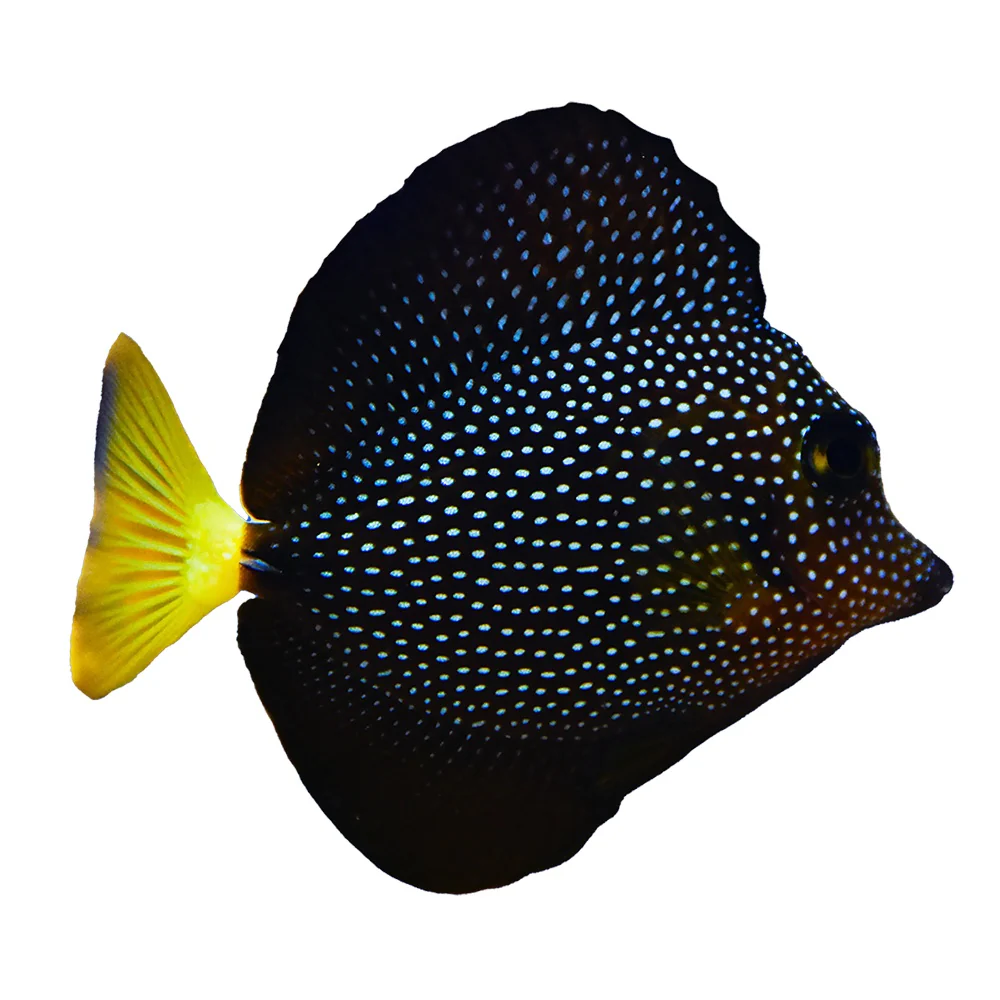
The Pattern: A deep, jet-black body covered in thousands of tiny, brilliant white-to-silver spots that resemble a starfield.
-
The Fins: It features the iconic "sail-like" dorsal and anal fins characteristic of the Zebrasoma genus.
-
The Tail: Features a stark white-to-yellow tail, providing a sharp contrast to the dark body.
-
The Scalpel: Like all tangs, it has a white, retractable spine at the base of the tail used for defense.
Behaviour & Tank Compatibility
-
Territoriality: The Gem Tang is known for having a "big personality." It can be quite aggressive toward other members of the Zebrasoma genus (like Yellow Tangs or Purple Tangs). It is best to make it the only member of its genus in the tank or introduce them simultaneously in a very large system.
-
Reef Safe: 100% Reef Safe. They are excellent utility fish, tirelessly grazing on hair algae and film algae throughout the day.
-
Activity Level: They are constant swimmers and will explore every inch of the rockwork. They are very observant and often watch their owners from the glass.
-
Tank Mates: Excellent with Wrasses, Anthias, and large Angelfish. If keeping with other tangs, choose species with different body shapes (like Naso or Ctenochaetus).
Ideal Tank Setup
-
Tank Size: A minimum of 380L–475L (100–125 Gallons) is required. While they stay smaller than some Acanthurus tangs, their activity level and territorial nature demand significant space.
-
Rockwork: Provide plenty of live rock with tunnels and caves. They need places to claim as their territory and retreat to at night.
-
Water Quality: Because this is a high-value investment, stability is key. They require high oxygen levels, strong water flow, and low nitrate/phosphate levels.
-
Lid: They are powerful swimmers and can jump if startled by a sudden light change or a territorial dispute. A secure lid is mandatory.
Dietary Needs
To maintain the deep black coloration and prevent Head and Lateral Line Erosion (HLLE):
-
Primary Diet: Provide high-quality Nori (dried seaweed) daily.
-
Variety: Supplement with spirulina-enriched flakes, herbivore pellets, and frozen mysis shrimp for protein.
-
Vitamins: It is highly recommended to soak their food in a vitamin supplement like Selcon or Zoe to boost their immune system.
Why Choose the Gem Tang?
The Gem Tang is for the hobbyist who wants a true "statement piece." Its combination of extreme rarity, stunning contrast, and functional value as an algae eater makes it the ultimate addition to a high-end reef. It is a hardy species once acclimated, and its "tough" personality ensures it will be a prominent and visible leader in your aquarium for many years.