Fowleri Tang (Acanthurus Fowleri)
Fowleri Tang (Acanthurus fowleri)
The Fowleri Tang, also known as the Horseshoe Surgeonfish, is a premier "collector’s tang" from the Western Pacific. It is highly prized for its subtle, regal beauty and its impressive adult size. While it lacks the neon flash of some other surgeonfish, it is widely considered one of the most sophisticated-looking members of the Acanthurus genus, featuring a "horseshoe" marking that makes it instantly recognizable to enthusiasts.
Key Information
-
Common Names: Fowleri Tang, Horseshoe Surgeonfish, Fowler's Surgeonfish
-
Scientific Name: Acanthurus fowleri
-
Origin: Western Pacific (Indonesia, Philippines, Solomon Islands, and Australia)
-
Max Size: 40–45 cm (approx. 16–18 inches)
-
Lifespan: 10–15+ years
-
Temperament: Semi-aggressive; can be territorial once established
-
Diet: Herbivore – Requires a diet rich in marine algae
-
Care Level: Moderate to Advanced (due to size and sensitivity)
Appearance & Identification
The Fowleri Tang is a masterclass in intricate detailing:
-
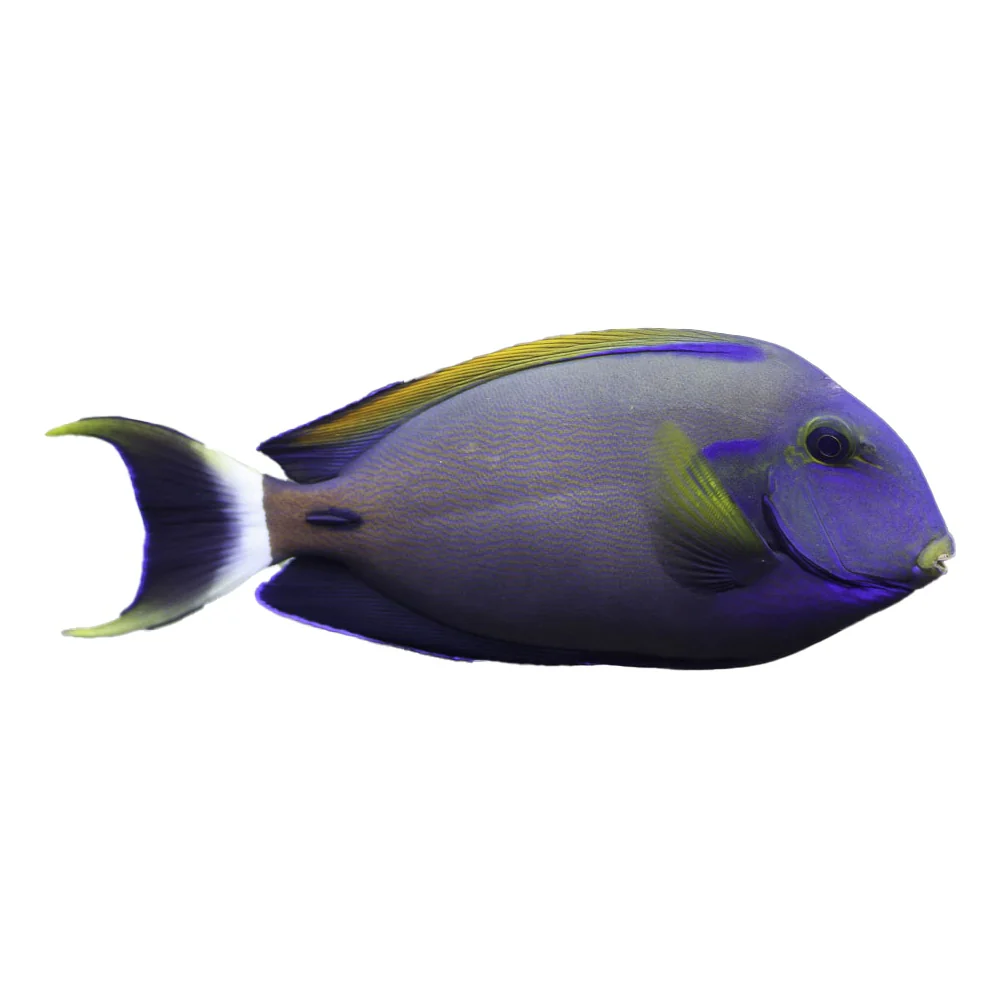
The "Horseshoe": Its namesake feature is a distinctive dark, horseshoe-shaped mark located just behind the eye/operculum.
-
Body Pattern: The body is a brownish-grey to steel-blue, covered in incredibly fine, horizontal blue and yellow wavy lines that create a "velvet" texture.
-
The Tail: Features a lyre-shaped tail (caudally elongated) that is often outlined in white or light blue, with a vibrant yellow or orange patch at the base of the caudal spine.
-
Fins: The dorsal and anal fins often display beautiful blue trimming and subtle orange highlights.
Behaviour & Tank Compatibility
-
Territorial Nature: Like many large Acanthurus species, the Fowleri can be quite assertive. It is best to make it one of the last additions to a tank to prevent it from bullying new arrivals.
-
Reef Safe: 100% Reef Safe. They are excellent for keeping live rock clean of film algae and detritus.
-
Active Swimmer: They are "open water" cruisers. They require a massive amount of horizontal swimming space and high water turnover to mimic the reef slopes they inhabit.
-
Tank Mates: Best kept with similarly sized, robust fish. It gets along well with large Angelfish, Triggers, and large Wrasses. Avoid keeping it with other tangs of the same genus (Acanthurus) unless the tank is very large (1,000L+).
Ideal Tank Setup
-
Tank Size: This is a large, active fish. A minimum of 680L (180 Gallons) is required for a juvenile, while a full-grown adult will need 950L–1,150L (250–300+ Gallons) to thrive.
-
Water Flow: They require strong water movement. High-flow powerheads or wavemakers are necessary to provide the oxygen-rich environment they need.
-
Rockwork: Provide plenty of live rock with large swim-throughs and caves. They need to be able to duck into a safe spot but spend most of their time in the water column.
-
Filtration: Because they eat a lot and are large-bodied, a high-capacity protein skimmer is essential to maintain low nitrate levels.
Dietary Needs
To maintain their color and health, they need a constant supply of greens:
-
Primary Diet: Provide dried seaweed (Nori) on a clip at least 3-4 times a week. They prefer green and purple varieties.
-
Supplemental: Offer high-quality herbivore pellets, flakes, and frozen mysis shrimp for added protein.
-
Vitamins: Soaking food in a vitamin supplement (like Selcon) is highly recommended to prevent Head and Lateral Line Erosion (HLLE).
Why Choose the Fowleri Tang?
The Fowleri Tang is for the hobbyist who wants a true "trophy" fish that isn't commonly seen in every local fish store. Its sophisticated markings and graceful, powerful swimming make it a standout centerpiece for a large-scale reef or FOWLR system. If you have the space and a high-flow setup, the Fowleri is a hardy and rewarding "gentle giant" that will grow with your aquarium for over a decade.
Description
Fowleri Tang (Acanthurus fowleri)
The Fowleri Tang, also known as the Horseshoe Surgeonfish, is a premier "collector’s tang" from the Western Pacific. It is highly prized for its subtle, regal beauty and its impressive adult size. While it lacks the neon flash of some other surgeonfish, it is widely considered one of the most sophisticated-looking members of the Acanthurus genus, featuring a "horseshoe" marking that makes it instantly recognizable to enthusiasts.
Key Information
-
Common Names: Fowleri Tang, Horseshoe Surgeonfish, Fowler's Surgeonfish
-
Scientific Name: Acanthurus fowleri
-
Origin: Western Pacific (Indonesia, Philippines, Solomon Islands, and Australia)
-
Max Size: 40–45 cm (approx. 16–18 inches)
-
Lifespan: 10–15+ years
-
Temperament: Semi-aggressive; can be territorial once established
-
Diet: Herbivore – Requires a diet rich in marine algae
-
Care Level: Moderate to Advanced (due to size and sensitivity)
Appearance & Identification
The Fowleri Tang is a masterclass in intricate detailing:
-
The "Horseshoe": Its namesake feature is a distinctive dark, horseshoe-shaped mark located just behind the eye/operculum.
-
Body Pattern: The body is a brownish-grey to steel-blue, covered in incredibly fine, horizontal blue and yellow wavy lines that create a "velvet" texture.
-
The Tail: Features a lyre-shaped tail (caudally elongated) that is often outlined in white or light blue, with a vibrant yellow or orange patch at the base of the caudal spine.
-
Fins: The dorsal and anal fins often display beautiful blue trimming and subtle orange highlights.
Behaviour & Tank Compatibility
-
Territorial Nature: Like many large Acanthurus species, the Fowleri can be quite assertive. It is best to make it one of the last additions to a tank to prevent it from bullying new arrivals.
-
Reef Safe: 100% Reef Safe. They are excellent for keeping live rock clean of film algae and detritus.
-
Active Swimmer: They are "open water" cruisers. They require a massive amount of horizontal swimming space and high water turnover to mimic the reef slopes they inhabit.
-
Tank Mates: Best kept with similarly sized, robust fish. It gets along well with large Angelfish, Triggers, and large Wrasses. Avoid keeping it with other tangs of the same genus (Acanthurus) unless the tank is very large (1,000L+).
Ideal Tank Setup
-
Tank Size: This is a large, active fish. A minimum of 680L (180 Gallons) is required for a juvenile, while a full-grown adult will need 950L–1,150L (250–300+ Gallons) to thrive.
-
Water Flow: They require strong water movement. High-flow powerheads or wavemakers are necessary to provide the oxygen-rich environment they need.
-
Rockwork: Provide plenty of live rock with large swim-throughs and caves. They need to be able to duck into a safe spot but spend most of their time in the water column.
-
Filtration: Because they eat a lot and are large-bodied, a high-capacity protein skimmer is essential to maintain low nitrate levels.
Dietary Needs
To maintain their color and health, they need a constant supply of greens:
-
Primary Diet: Provide dried seaweed (Nori) on a clip at least 3-4 times a week. They prefer green and purple varieties.
-
Supplemental: Offer high-quality herbivore pellets, flakes, and frozen mysis shrimp for added protein.
-
Vitamins: Soaking food in a vitamin supplement (like Selcon) is highly recommended to prevent Head and Lateral Line Erosion (HLLE).
Why Choose the Fowleri Tang?
The Fowleri Tang is for the hobbyist who wants a true "trophy" fish that isn't commonly seen in every local fish store. Its sophisticated markings and graceful, powerful swimming make it a standout centerpiece for a large-scale reef or FOWLR system. If you have the space and a high-flow setup, the Fowleri is a hardy and rewarding "gentle giant" that will grow with your aquarium for over a decade.