Longnose Butterfly (Forcipiger Flavissimus)
Longnose Butterflyfish (Forcipiger flavissimus)
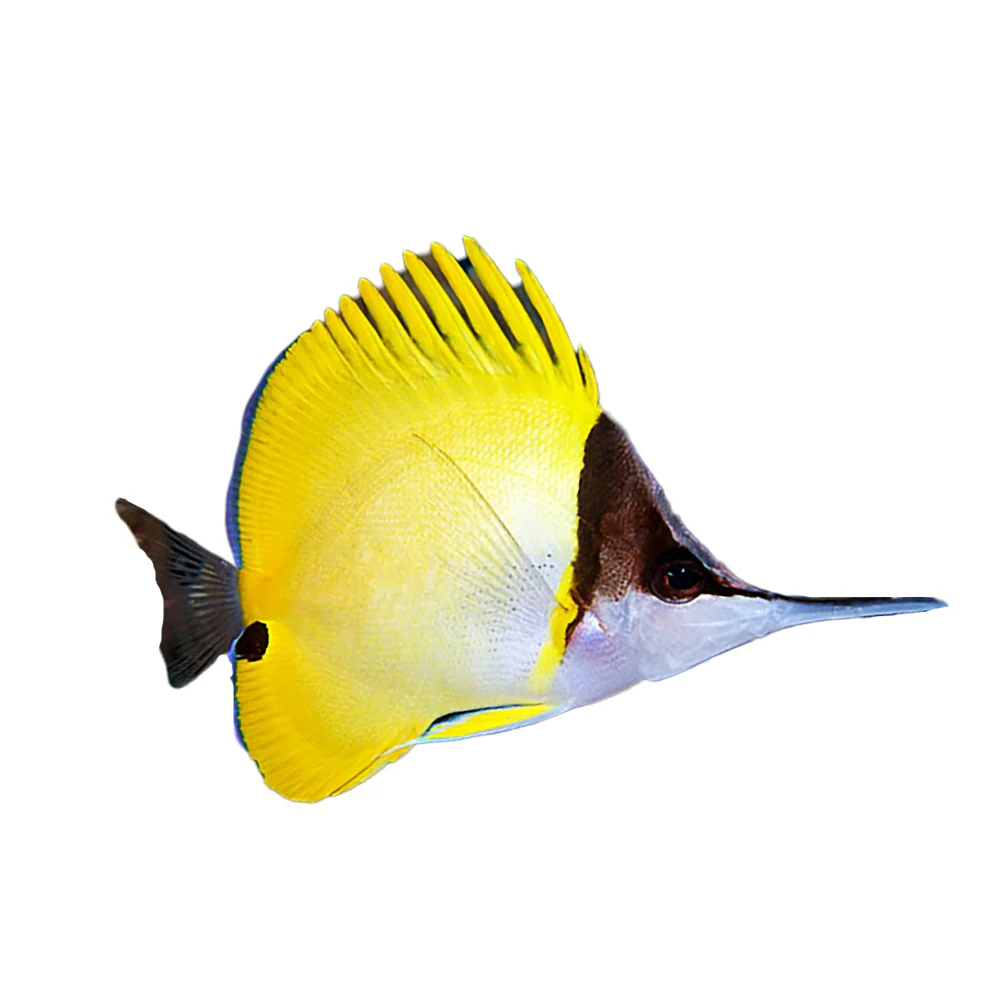
The Longnose Butterflyfish, often called the Yellow Longnose, is one of the most iconic and recognizable fish on the tropical reef. With its needle-like snout and brilliant yellow body, it looks like a delicate piece of living art. While many butterflyfish are notoriously difficult to keep, the F. flavissimus is widely considered one of the hardiest and most adaptable members of the family, making it a favorite for intermediate marine hobbyists.
Key Information
-
Common Names: Longnose Butterfly, Yellow Longnose, Forceps Fish
-
Scientific Name: Forcipiger flavissimus
-
Origin: Indo-Pacific and Tropical Eastern Pacific (Red Sea to Hawaii and Easter Island)
-
Max Size: 22 cm (approx. 8.5 inches)
-
Lifespan: 7–10 years
-
Temperament: Peaceful; shy when first introduced
-
Diet: Carnivore – Specialist in small invertebrates
-
Care Level: Moderate (Hardy for a Butterflyfish)
Appearance & Identification
The Longnose is defined by its "geometric" aesthetic and specialized anatomy:
-
The Snout: Features a very long, tubular snout used for "plucking" small prey (like tubeworms and crustacean bits) from deep crevices in the rockwork.
-
The "Eye" Spot: Features a distinct black spot on the anal fin (near the tail). This is an evolutionary trick to fool predators into thinking the tail is the head.
-
Coloration: A solid, vibrant canary yellow body with a black-and-white mask on the head.
-
VS. Big Longnose (F. longirostris): The F. flavissimus has a slightly shorter snout and a larger mouth opening compared to its rarer cousin, the Big Longnose.
Behaviour & Tank Compatibility
-
The Precision Picker: This fish is a constant browser. It spends its day "probing" the live rock with its long nose. It is a natural predator of small polychaetes (bristle worms) and feather dusters.
-
Reef Safe (with Caution): It is generally safer than most butterflies. It rarely bothers stony corals (SPS/LPS), but it will almost certainly eat tubeworms, feather dusters, and small ornamental shrimp. It may occasionally nip at clam mantles or zoanthids if underfed.
-
Social Structure: Best kept singly unless you have a confirmed mated pair. They can be territorial toward their own kind and the very similar Copperband Butterfly.
-
Tank Mates: Excellent with Tangs, peaceful Wrasses, and Anthias. Avoid aggressive "bullies" that might nip at its long snout or prevent it from feeding.
Ideal Tank Setup
-
Tank Size: A minimum of 285L (75 Gallons). They need plenty of horizontal swimming space and a mature rockscape.
-
Rockwork: Provide extensive live rock with many small holes and deep crevices. This allows the fish to use its specialized snout to hunt naturally.
-
Water Quality: They require pristine water conditions and high oxygenation. Stable salinity and low nitrates are key to their longevity.
-
Feeding: Unlike many butterflies, they usually transition well to aquarium life. Offer frozen mysis, finely chopped squid, and vitamin-enriched brine shrimp 2–3 times daily.
Description
Longnose Butterflyfish (Forcipiger flavissimus)
The Longnose Butterflyfish, often called the Yellow Longnose, is one of the most iconic and recognizable fish on the tropical reef. With its needle-like snout and brilliant yellow body, it looks like a delicate piece of living art. While many butterflyfish are notoriously difficult to keep, the F. flavissimus is widely considered one of the hardiest and most adaptable members of the family, making it a favorite for intermediate marine hobbyists.
Key Information
-
Common Names: Longnose Butterfly, Yellow Longnose, Forceps Fish
-
Scientific Name: Forcipiger flavissimus
-
Origin: Indo-Pacific and Tropical Eastern Pacific (Red Sea to Hawaii and Easter Island)
-
Max Size: 22 cm (approx. 8.5 inches)
-
Lifespan: 7–10 years
-
Temperament: Peaceful; shy when first introduced
-
Diet: Carnivore – Specialist in small invertebrates
-
Care Level: Moderate (Hardy for a Butterflyfish)
Appearance & Identification
The Longnose is defined by its "geometric" aesthetic and specialized anatomy:
-
The Snout: Features a very long, tubular snout used for "plucking" small prey (like tubeworms and crustacean bits) from deep crevices in the rockwork.
-
The "Eye" Spot: Features a distinct black spot on the anal fin (near the tail). This is an evolutionary trick to fool predators into thinking the tail is the head.
-
Coloration: A solid, vibrant canary yellow body with a black-and-white mask on the head.
-
VS. Big Longnose (F. longirostris): The F. flavissimus has a slightly shorter snout and a larger mouth opening compared to its rarer cousin, the Big Longnose.
Behaviour & Tank Compatibility
-
The Precision Picker: This fish is a constant browser. It spends its day "probing" the live rock with its long nose. It is a natural predator of small polychaetes (bristle worms) and feather dusters.
-
Reef Safe (with Caution): It is generally safer than most butterflies. It rarely bothers stony corals (SPS/LPS), but it will almost certainly eat tubeworms, feather dusters, and small ornamental shrimp. It may occasionally nip at clam mantles or zoanthids if underfed.
-
Social Structure: Best kept singly unless you have a confirmed mated pair. They can be territorial toward their own kind and the very similar Copperband Butterfly.
-
Tank Mates: Excellent with Tangs, peaceful Wrasses, and Anthias. Avoid aggressive "bullies" that might nip at its long snout or prevent it from feeding.
Ideal Tank Setup
-
Tank Size: A minimum of 285L (75 Gallons). They need plenty of horizontal swimming space and a mature rockscape.
-
Rockwork: Provide extensive live rock with many small holes and deep crevices. This allows the fish to use its specialized snout to hunt naturally.
-
Water Quality: They require pristine water conditions and high oxygenation. Stable salinity and low nitrates are key to their longevity.
-
Feeding: Unlike many butterflies, they usually transition well to aquarium life. Offer frozen mysis, finely chopped squid, and vitamin-enriched brine shrimp 2–3 times daily.