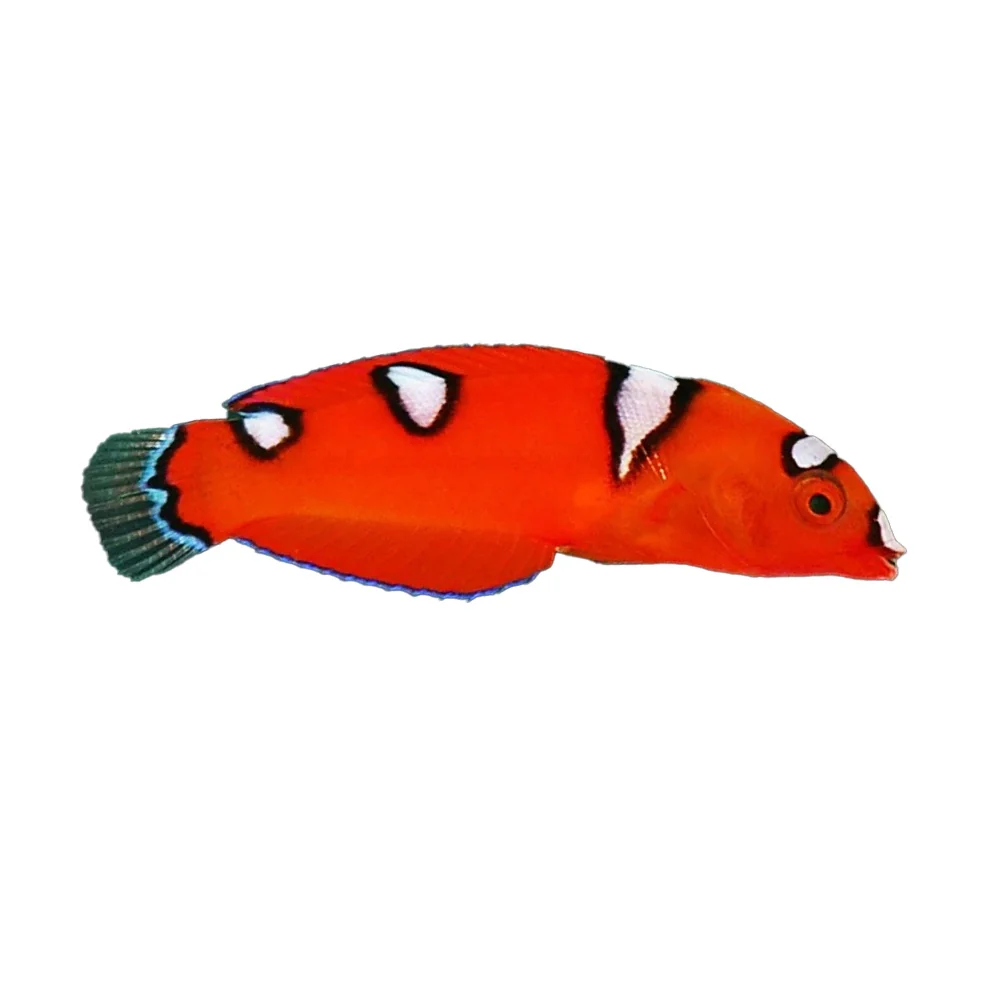
Flame Wrasse Juvenile (Cirrhilabrus Jordani)
Flame Wrasse Juvenile (Cirrhilabrus jordani)
While the adult Flame Wrasse is a fiery masterpiece, the Juvenile stage is quite different—often described as subtle, charming, and a bit of a "mystery box" for the hobbyist. Because these fish are protogynous hermaphrodites (all are born female/juvenile and the most dominant becomes male), purchasing a juvenile is an affordable and rewarding way to watch a spectacular biological transformation happen in your own tank.
Key Information
-
Common Names: Juvenile Flame Wrasse, Juvenile Jordan’s Wrasse
-
Scientific Name: Cirrhilabrus jordani
-
Origin: Hawaii (Deep-water reefs)
-
Max Size (as Juvenile): 3–5 cm (approx. 1–2 inches)
-
Temperament: Very Peaceful and shy
-
Diet: Carnivore – Plankton-picker
-
Care Level: Moderate (Sensitive to shipping and decompression)
Appearance & Identification
Juvenile Flame Wrasses lack the "glowing" gold and deep red of the terminal males. Instead, they look more like "Pink Fairy Wrasses":
-
Coloration: A soft, translucent pink-to-orange body.
-
Identifying Mark: They typically feature a small dark spot (ocellus) on the upper part of the tail base (caudal peduncle). This spot usually fades as the fish matures into a male.
-
Fins: The fins are mostly clear or have a light yellow tint, lacking the bold violet or red edges seen in adults.
The Transformation (The "Why")
The primary reason hobbyists buy juveniles (aside from the lower price point) is the transition:
-
Social Trigger: If you keep a single juvenile, it will almost certainly transition into a male over 6–12 months.
-
The "Flash": As they begin the change, you will see the yellow/gold "lava" color start to spread from the belly upward, and the pinkish-red on the back will deepen and intensify.
-
Maturity: The black spot on the tail will disappear, and the fins will begin to elongate and develop their signature "flame" filaments.
Behaviour & Tank Compatibility
-
High Sensitivity: Juveniles are much more delicate than adults. They are highly susceptible to stress during shipping and acclimation.
-
Shyness: Expect a juvenile to hide in the rockwork for the first 3–5 days. Do not try to flush them out; they need this time to adjust to your light cycle.
-
Reef Safe: 100% Reef Safe. They are perfect for nano reefs or large displays alike.
-
Tank Mates: Avoid any aggressive fish. Even a "mean" clownfish or a small damsel can easily bully a juvenile Flame Wrasse into staying in the sand/rocks until it starves. Best kept with Firefish, Cardinalfish, and other peaceful residents.
Ideal Tank Setup
-
Acclimation Box: Highly Recommended. Using a clear plastic acclimation box for the first 2–3 days allows the juvenile to see its tank mates (and vice versa) in safety.
-
Lighting: Since these are deep-water fish, dim the lights during their first few days. High-intensity reef LEDs can be blinding and stressful for a juvenile transitioning from the depths of Hawaii.
-
Lid: Like the adults, juveniles are "missiles." They can jump through the tiniest gap in a screen or glass lid.
-
Feeding: Juveniles have tiny stomachs. Feed 3–4 times a day with very small portions of Calanus, cyclops, or finely shaved frozen mysis.
Why Choose a Juvenile?
Buying a juvenile Flame Wrasse is a long-term investment. You get the joy of raising a "rare" Hawaiian endemic from a small, pinkish fry into one of the most prestigious males in the hobby. It is a fantastic way to ensure the fish is well-acclimated to your specific water chemistry and feeding schedule before it reaches its most active life stage.
Description
Flame Wrasse Juvenile (Cirrhilabrus jordani)
While the adult Flame Wrasse is a fiery masterpiece, the Juvenile stage is quite different—often described as subtle, charming, and a bit of a "mystery box" for the hobbyist. Because these fish are protogynous hermaphrodites (all are born female/juvenile and the most dominant becomes male), purchasing a juvenile is an affordable and rewarding way to watch a spectacular biological transformation happen in your own tank.
Key Information
-
Common Names: Juvenile Flame Wrasse, Juvenile Jordan’s Wrasse
-
Scientific Name: Cirrhilabrus jordani
-
Origin: Hawaii (Deep-water reefs)
-
Max Size (as Juvenile): 3–5 cm (approx. 1–2 inches)
-
Temperament: Very Peaceful and shy
-
Diet: Carnivore – Plankton-picker
-
Care Level: Moderate (Sensitive to shipping and decompression)
Appearance & Identification
Juvenile Flame Wrasses lack the "glowing" gold and deep red of the terminal males. Instead, they look more like "Pink Fairy Wrasses":
-
Coloration: A soft, translucent pink-to-orange body.
-
Identifying Mark: They typically feature a small dark spot (ocellus) on the upper part of the tail base (caudal peduncle). This spot usually fades as the fish matures into a male.
-
Fins: The fins are mostly clear or have a light yellow tint, lacking the bold violet or red edges seen in adults.
The Transformation (The "Why")
The primary reason hobbyists buy juveniles (aside from the lower price point) is the transition:
-
Social Trigger: If you keep a single juvenile, it will almost certainly transition into a male over 6–12 months.
-
The "Flash": As they begin the change, you will see the yellow/gold "lava" color start to spread from the belly upward, and the pinkish-red on the back will deepen and intensify.
-
Maturity: The black spot on the tail will disappear, and the fins will begin to elongate and develop their signature "flame" filaments.
Behaviour & Tank Compatibility
-
High Sensitivity: Juveniles are much more delicate than adults. They are highly susceptible to stress during shipping and acclimation.
-
Shyness: Expect a juvenile to hide in the rockwork for the first 3–5 days. Do not try to flush them out; they need this time to adjust to your light cycle.
-
Reef Safe: 100% Reef Safe. They are perfect for nano reefs or large displays alike.
-
Tank Mates: Avoid any aggressive fish. Even a "mean" clownfish or a small damsel can easily bully a juvenile Flame Wrasse into staying in the sand/rocks until it starves. Best kept with Firefish, Cardinalfish, and other peaceful residents.
Ideal Tank Setup
-
Acclimation Box: Highly Recommended. Using a clear plastic acclimation box for the first 2–3 days allows the juvenile to see its tank mates (and vice versa) in safety.
-
Lighting: Since these are deep-water fish, dim the lights during their first few days. High-intensity reef LEDs can be blinding and stressful for a juvenile transitioning from the depths of Hawaii.
-
Lid: Like the adults, juveniles are "missiles." They can jump through the tiniest gap in a screen or glass lid.
-
Feeding: Juveniles have tiny stomachs. Feed 3–4 times a day with very small portions of Calanus, cyclops, or finely shaved frozen mysis.
Why Choose a Juvenile?
Buying a juvenile Flame Wrasse is a long-term investment. You get the joy of raising a "rare" Hawaiian endemic from a small, pinkish fry into one of the most prestigious males in the hobby. It is a fantastic way to ensure the fish is well-acclimated to your specific water chemistry and feeding schedule before it reaches its most active life stage.