Burgess Butterfly (Chaetodon Burgessi)
Burgess Butterflyfish (Chaetodon burgessi)
The Burgess Butterflyfish, also known as the Black-barred Butterflyfish, is a highly regarded "deep-water" species from the Western Pacific. Unlike many of its delicate relatives, the Burgess is considered one of the hardiest and most adaptable butterflyfishes for the home aquarium. It is prized for its graphic, high-contrast black and white pattern and its tendency to be much more resilient to the typical stressors of captive life.
Key Information
-
Common Names: Burgess Butterfly, Black-barred Butterfly, Blackened Butterflyfish
-
Scientific Name: Chaetodon burgessi
-
Origin: Western Pacific (Philippines, Indonesia, Palau, and parts of Australia)
-
Max Size: 13–14 cm (approx. 5–5.5 inches)
-
Lifespan: 7–10+ years
-
Temperament: Peaceful; shy when first introduced
-
Diet: Omnivore – Readily accepts prepared foods
-
Care Level: Moderate (High for a Butterflyfish, but still requires stable water)
Appearance & Identification
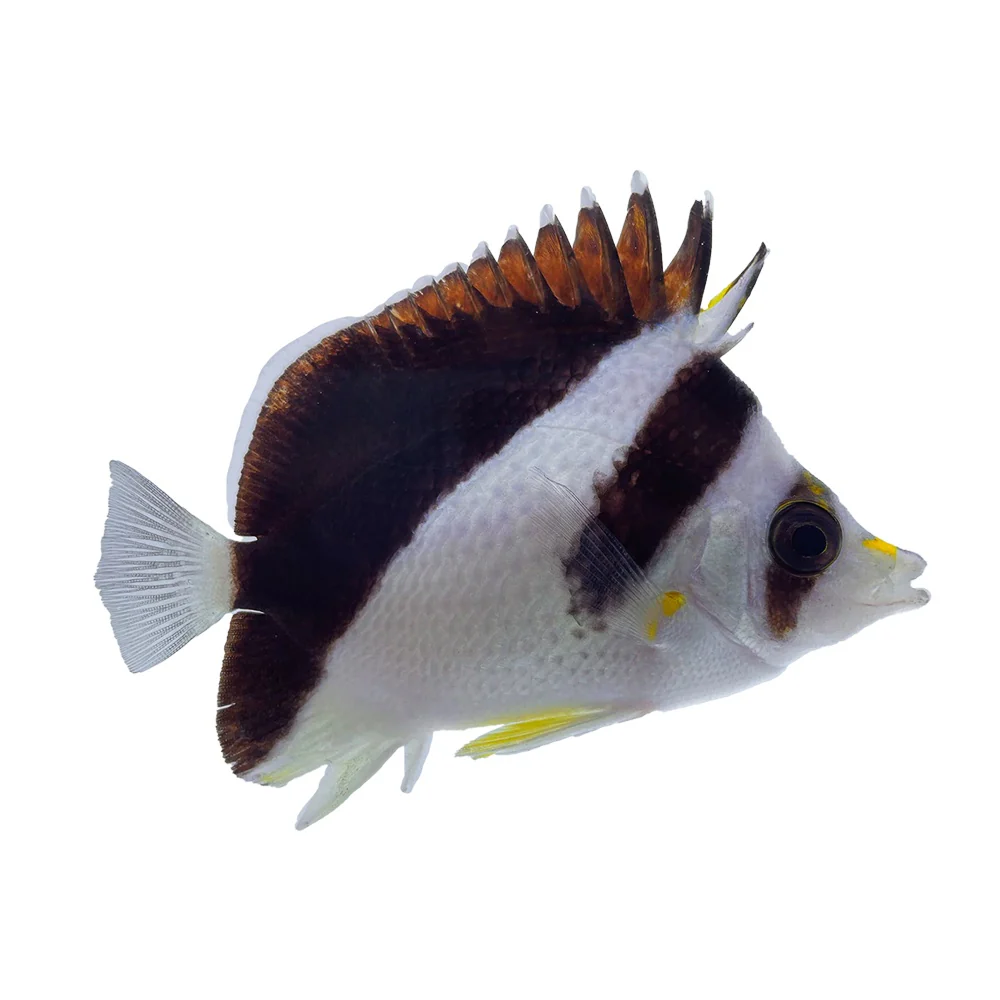
The Burgess Butterflyfish is defined by a clean, geometric aesthetic:
-
The Bands: It features three bold diagonal black bands across a stark white-to-cream body.
-
The first band acts as a mask over the eyes.
-
The second runs from the forehead toward the pectoral fin.
-
The third is a wide wedge covering the rear third of the body.
-
-
Regional Variants: Some specimens from specific regions may show subtle yellow highlights on the dorsal fin or face.
-
Deep-Water Heritage: Belonging to the Roaops subgenus, it is naturally found at depths of 40–80 meters, giving it a slightly more compressed and robust body shape than shallow-water species.
Behaviour & Tank Compatibility
-
Reef Safe (with Caution): It is a "Semi-Reef Safe" fish. While it is generally safer than most Chaetodon, it is known to eat Aiptasia anemones (a benefit!) but may also nip at LPS corals, zoanthids, and clam mantles. It is usually safe with SPS corals and soft corals like mushrooms and leathers.
-
Social Structure: It is best kept singly or as a bonded pair. It is peaceful toward most other fish but can be territorial toward other butterflyfish of a similar shape or pattern.
-
Confidence: Though shy at first, once it acclimates, it is an active swimmer that will spend its day gracefully picking at the rockwork for food.
-
Tank Mates: Excellent with Tangs, Anthias, and peaceful Wrasses. Avoid highly aggressive "bullies" that might prevent this shy fish from feeding.
Ideal Tank Setup
-
Tank Size: A minimum of 285L (75 Gallons) is recommended to provide enough horizontal swimming space and stable water volume.
-
Rockwork: Provide excessive live rock with many overhangs and caves to mimic its deep-water ledge habitat. This allows the fish to feel secure in the "shadows" if the lighting is bright.
-
Lighting: Because they come from deeper water, they may be sensitive to high-intensity reef lights initially. Acclimate them slowly to bright lighting or provide shaded areas in the tank.
-
Water Quality: They require pristine water conditions. High-quality protein skimming and low nitrates (<20ppm) are essential for long-term health.
-
Feeding: Feed 2–3 times daily. They typically transition well to frozen mysis, enriched brine shrimp, and high-quality flakes. "Clam on the half-shell" is an excellent way to trigger a feeding response in new arrivals.
Why Choose the Burgess Butterflyfish?
The Burgess Butterflyfish is the "goldilocks" of the butterflyfish family: it is rarer and more exotic than common species, yet hardier and easier to feed than the delicate ones. Its ability to help control Aiptasia while remaining relatively safe for many corals makes it a premier choice for hobbyists looking for a sophisticated centerpiece that adds both utility and striking monochrome beauty to their system.
Description
Burgess Butterflyfish (Chaetodon burgessi)
The Burgess Butterflyfish, also known as the Black-barred Butterflyfish, is a highly regarded "deep-water" species from the Western Pacific. Unlike many of its delicate relatives, the Burgess is considered one of the hardiest and most adaptable butterflyfishes for the home aquarium. It is prized for its graphic, high-contrast black and white pattern and its tendency to be much more resilient to the typical stressors of captive life.
Key Information
-
Common Names: Burgess Butterfly, Black-barred Butterfly, Blackened Butterflyfish
-
Scientific Name: Chaetodon burgessi
-
Origin: Western Pacific (Philippines, Indonesia, Palau, and parts of Australia)
-
Max Size: 13–14 cm (approx. 5–5.5 inches)
-
Lifespan: 7–10+ years
-
Temperament: Peaceful; shy when first introduced
-
Diet: Omnivore – Readily accepts prepared foods
-
Care Level: Moderate (High for a Butterflyfish, but still requires stable water)
Appearance & Identification
The Burgess Butterflyfish is defined by a clean, geometric aesthetic:
-
The Bands: It features three bold diagonal black bands across a stark white-to-cream body.
-
The first band acts as a mask over the eyes.
-
The second runs from the forehead toward the pectoral fin.
-
The third is a wide wedge covering the rear third of the body.
-
-
Regional Variants: Some specimens from specific regions may show subtle yellow highlights on the dorsal fin or face.
-
Deep-Water Heritage: Belonging to the Roaops subgenus, it is naturally found at depths of 40–80 meters, giving it a slightly more compressed and robust body shape than shallow-water species.
Behaviour & Tank Compatibility
-
Reef Safe (with Caution): It is a "Semi-Reef Safe" fish. While it is generally safer than most Chaetodon, it is known to eat Aiptasia anemones (a benefit!) but may also nip at LPS corals, zoanthids, and clam mantles. It is usually safe with SPS corals and soft corals like mushrooms and leathers.
-
Social Structure: It is best kept singly or as a bonded pair. It is peaceful toward most other fish but can be territorial toward other butterflyfish of a similar shape or pattern.
-
Confidence: Though shy at first, once it acclimates, it is an active swimmer that will spend its day gracefully picking at the rockwork for food.
-
Tank Mates: Excellent with Tangs, Anthias, and peaceful Wrasses. Avoid highly aggressive "bullies" that might prevent this shy fish from feeding.
Ideal Tank Setup
-
Tank Size: A minimum of 285L (75 Gallons) is recommended to provide enough horizontal swimming space and stable water volume.
-
Rockwork: Provide excessive live rock with many overhangs and caves to mimic its deep-water ledge habitat. This allows the fish to feel secure in the "shadows" if the lighting is bright.
-
Lighting: Because they come from deeper water, they may be sensitive to high-intensity reef lights initially. Acclimate them slowly to bright lighting or provide shaded areas in the tank.
-
Water Quality: They require pristine water conditions. High-quality protein skimming and low nitrates (<20ppm) are essential for long-term health.
-
Feeding: Feed 2–3 times daily. They typically transition well to frozen mysis, enriched brine shrimp, and high-quality flakes. "Clam on the half-shell" is an excellent way to trigger a feeding response in new arrivals.
Why Choose the Burgess Butterflyfish?
The Burgess Butterflyfish is the "goldilocks" of the butterflyfish family: it is rarer and more exotic than common species, yet hardier and easier to feed than the delicate ones. Its ability to help control Aiptasia while remaining relatively safe for many corals makes it a premier choice for hobbyists looking for a sophisticated centerpiece that adds both utility and striking monochrome beauty to their system.